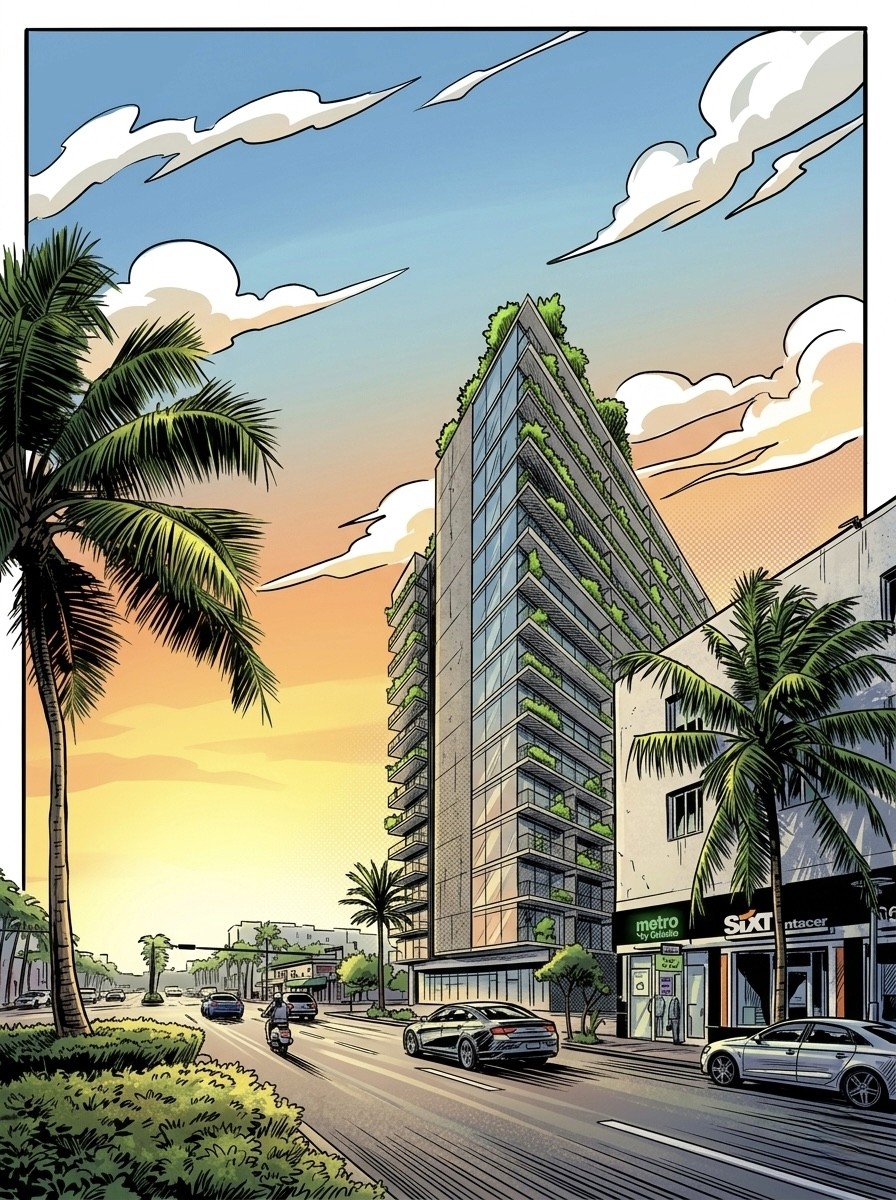
A 15-story residential tower at 1826 Collins Avenue in Miami Beach is advancing through the approval process, marking one of the city's first developments shaped by Florida's Live Local Act. The project signals a shift in how new housing gets built on the Beach — and how much say the public has in the process.
Developed by Lefferts, an affiliate of Crescent Heights, the mixed-use building at 1826 Collins will include 29 residential units, one floor of office space, and a rooftop amenity area. Units range from 500-square-foot studios to spacious three-bedroom residences, with upper levels offering views of the ocean and Miami Beach skyline. Forty percent of the apartments will be designated as below-market-rate housing, a core requirement of the Live Local Act's affordability incentives.
What makes this project stand out is the approval pathway. Unlike traditional Miami Beach developments, where public hearings and commission votes can stall or reshape proposals, the 1826 Collins tower is moving forward largely through administrative channels. The Planning Board's upcoming review will focus on the technical approval of a mechanical car elevator parking system rather than the project itself. That distinction matters — it reflects how the Live Local Act is fundamentally changing the development playbook in one of South Florida's most regulation-heavy municipalities.
The 1826 Collins site sits on a compact 9,655-square-foot lot near the Art Deco District and Lincoln Road. The tower will also feature 35 parking spaces served by the mechanical elevator system and approximately 3,500 square feet of office space. It is not the only Live Local project in the pipeline — at least eight such developments have been proposed across Miami Beach, including a 31-story Crescent Heights tower at 824 Alton Road and a 210-unit building at 1600 Washington Avenue.
For Miami Beach residents watching the skyline shift, the 1826 Collins project is a preview of what's coming. The Live Local Act was designed to fast-track workforce housing across Florida by letting qualifying projects bypass local zoning restrictions and public opposition. Whether that trade-off delivers meaningful affordability or simply reshapes the city's built environment remains an open question — but the construction timeline is no longer theoretical. The deal, as the saying goes, is done.
STAY IN THE KNOW
The stories shaping culture, delivered straight to your inbox.
Get exclusive editorial coverage on the events, brands, and trends that matter most. No spam, just substance.