A construction worker died in the early hours of March 23 after falling roughly 20 feet from an Interstate 395 overpass onto Biscayne Boulevard in downtown Miami. His name was Jorge Eliud Galindo Thompson, and his death was the second fatal incident this year on one of the most expensive and controversial infrastructure projects in South Florida history. The Signature Bridge project has been plagued by cost overruns, delays, and now a body count that is forcing regulators, residents, and elected officials to ask whether anyone is actually in charge of keeping workers alive on this site.
What Happened on the I-395 Overpass
According to the Florida Highway Patrol, the incident happened just before 4 a.m. on a Monday morning. Galindo fell from the overpass structure of Interstate 395 and landed on Biscayne Boulevard below. He was pronounced dead at the scene. Both FHP and OSHA are investigating. The Miami New Times reported this was the second worker fatality on the same project this year, a fact that should alarm anyone paying attention to construction safety standards in Florida.
The Signature Bridge and Its Troubled History
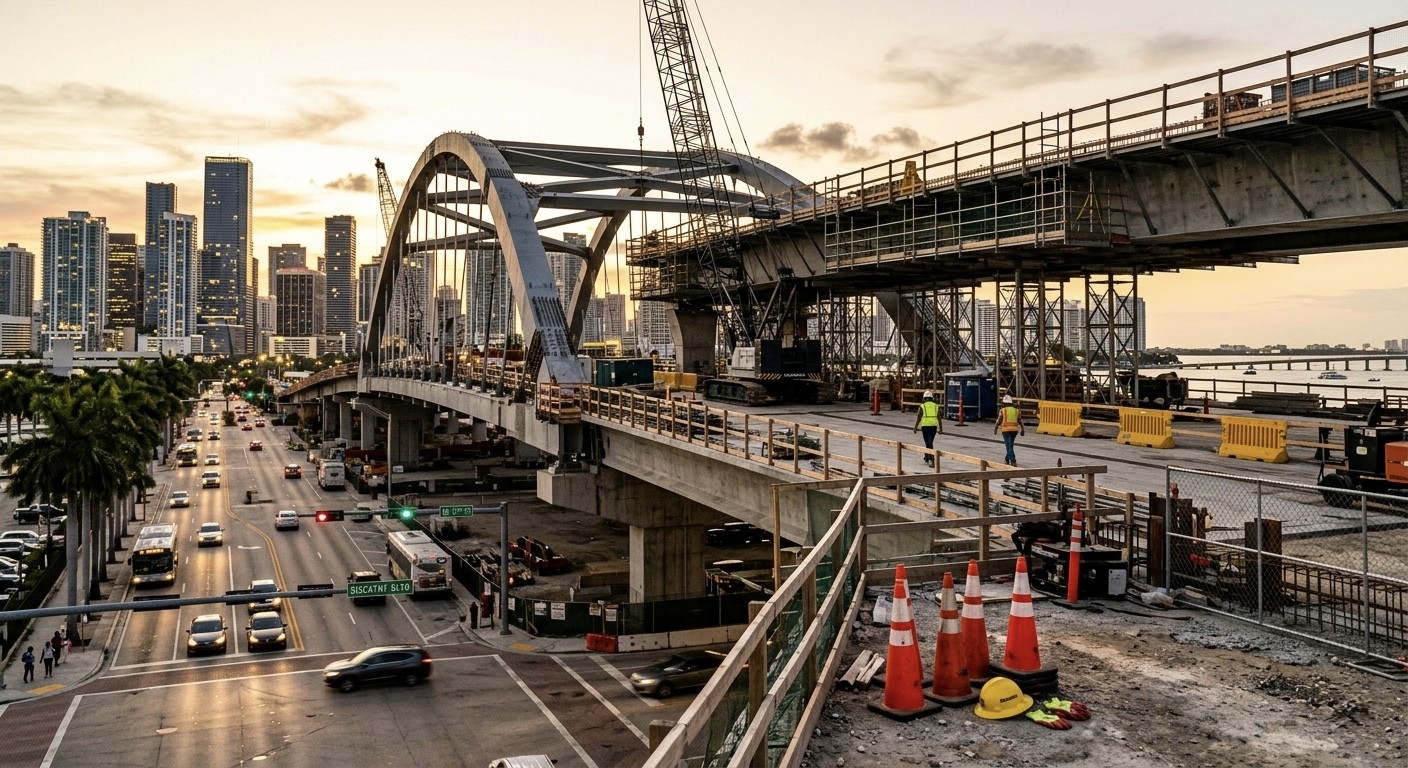
The I-395/SR 836/I-95 Design-Build Project is a massive infrastructure overhaul connecting three of Miami-Dade County's most critical highways. Its centerpiece is the Signature Bridge, a sweeping arch that has become a defining visual element of downtown Miami's skyline from Biscayne Boulevard. The project has been under construction for years, with budgets that have ballooned well past original estimates. Traffic disruptions along major corridors have been a daily reality for tens of thousands of commuters. And now there is a clear pattern of on-site danger that goes beyond inconvenience. Two workers have died in 2026 alone. That is not a rounding error. That is a failure of oversight.
Who Is Responsible for Worker Safety?
On a design-build project of this scale, responsibility is shared between the Florida Department of Transportation, the general contractor, subcontractors, and on-site safety managers. OSHA has opened an investigation into this latest death, but the results of any prior review from the first fatality earlier this year have not been made public. Florida ranks among the most dangerous states in the country for construction workers, driven by rapid development, limited union presence, and enforcement that often lags behind the pace of building. The Signature Bridge project sits at the intersection of all three problems.
Why Miami Should Care Beyond the Headlines
Biscayne Boulevard is not a rural highway. It is the front door to downtown Miami, lined with hotels, restaurants, and residential towers. A man fell from the sky onto that street at 4 a.m. because he was building the bridge that the city's leaders pitch as a symbol of Miami's future. The contrast between the Signature Bridge's promotional aesthetics and the reality that workers are dying on it is the kind of gap that defines how Miami operates. Big money. Big vision. And a pattern of looking the other way when the people doing the actual work are at risk.
What Comes Next
OSHA and FHP investigations are ongoing. The NTSB may also take a role given the nature of the fall and the federal highway infrastructure involved. Whether those investigations lead to enforcement actions, fines, or project shutdowns remains to be seen. What is certain is that Jorge Eliud Galindo Thompson went to work in downtown Miami and did not come home, and the project that killed him will continue rising above Biscayne Boulevard as if nothing happened. If Miami wants to be taken seriously as a world-class city, it needs to start with the basics. Keeping the people who build it alive is the absolute minimum.
STAY IN THE KNOW
The stories shaping culture, delivered straight to your inbox.
Get exclusive editorial coverage on the events, brands, and trends that matter most. No spam, just substance.