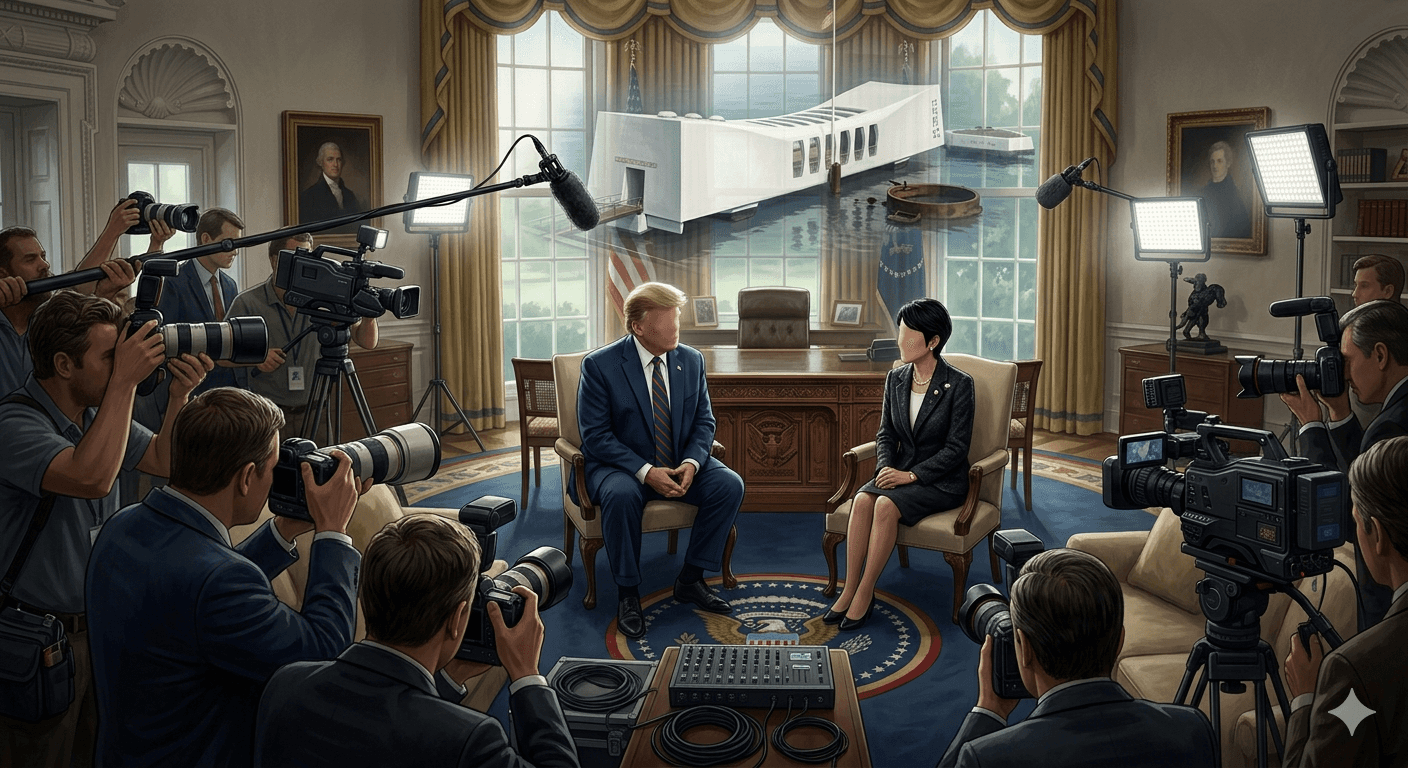
During Japanese Prime Minister Sanae Takaichi's first official visit to the White House on March 19, 2026, a 30-minute press session in the Oval Office produced one of the most talked-about moments of the year in U.S.-Japan relations. A Japanese reporter asked President Donald Trump why the United States had launched military strikes on Iran without first consulting its closest Pacific ally. Trump's response, delivered with a half-smile, was as blunt as it was unexpected: he referenced Japan's 1941 attack on Pearl Harbor, effectively asking why Japan had not warned the U.S. about that surprise attack either.
The room went quiet. Multiple news outlets including The New York Times, PBS, and the Associated Press captured the moment, noting that Takaichi's faint smile appeared to fade as she raised her eyebrows and took what appeared to be a deep breath. The NYT described Trump as breaking a taboo, while PBS reported that Takaichi's reaction was visible even through the practiced composure expected of a head of state. The comment drew nervous laughter from parts of the press pool and visible discomfort from the Japanese delegation seated nearby.
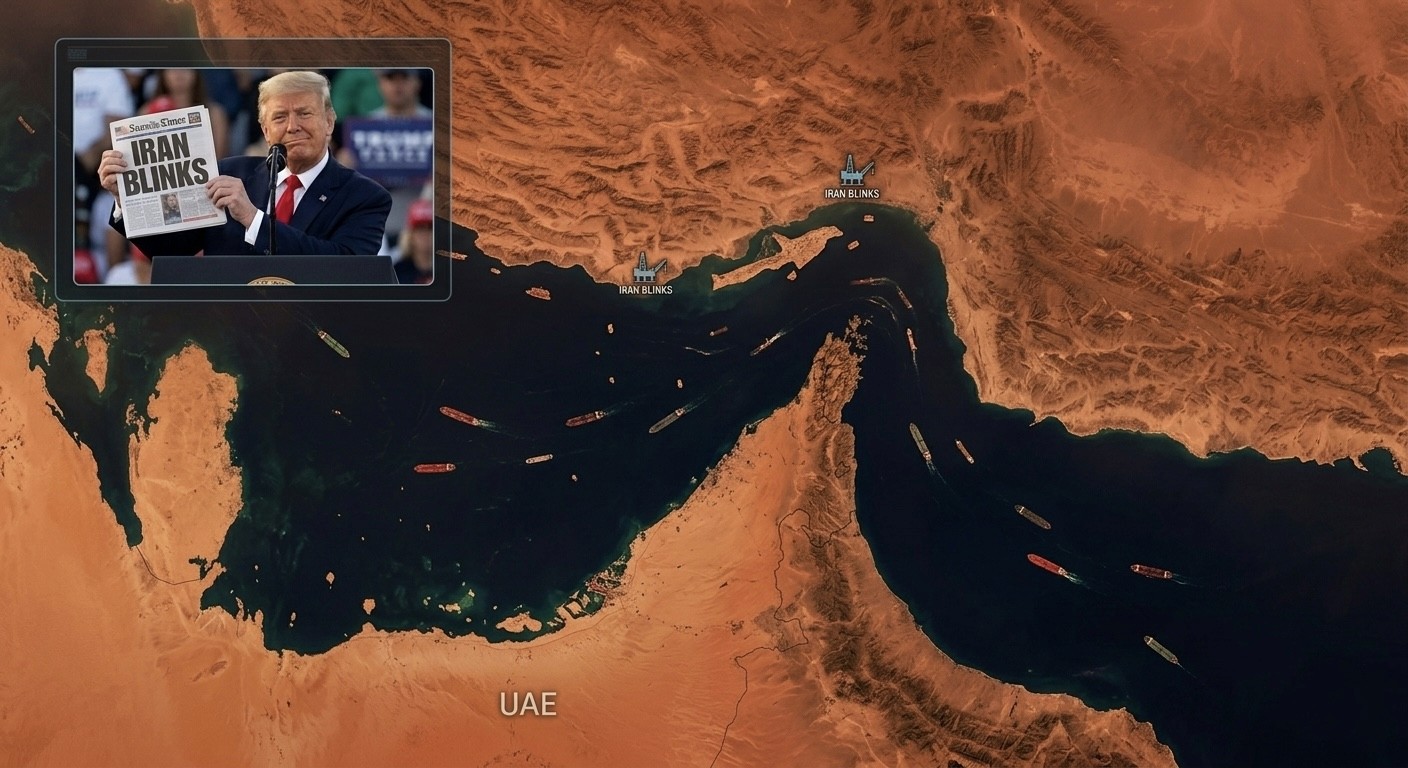
The remark did not come out of nowhere. The broader context of the visit was the U.S.-Israeli military campaign against Iran, which had escalated in the weeks prior. Trump had publicly demanded that allies, Japan included, send warships to help secure the Strait of Hormuz, through which the majority of Japan's oil and natural gas imports pass. Tokyo had resisted, pointing to constitutional limits on deploying its Self-Defense Forces to active combat zones. The question from the Japanese reporter was direct: why was Japan not informed before strikes were launched? Trump's Pearl Harbor deflection effectively reframed the conversation, turning a present-day accountability question into an 83-year-old historical grievance.
Reaction in Japan was swift and largely negative. Japanese commentators described the remark as awkward, jarring, and in poor taste, noting that Pearl Harbor remains one of the most solemn and complex subjects in Japanese public life. The attack of December 7, 1941, is not treated lightly in Japan, where it is understood as part of a broader national reckoning with wartime history that has shaped the country's pacifist constitution and its postwar identity. Using it as a punchline on live television, especially in the presence of Japan's prime minister, was seen as a breach of the unwritten rules governing how allies discuss shared history.
Foreign policy analysts were quick to point out the rhetorical maneuver at work. The reporter's question was about a concrete, present-day failure of alliance consultation. By invoking Pearl Harbor, Trump shifted the frame entirely, implying that Japan had no standing to complain about surprise actions given its own history. It was a deflection dressed as a joke, and it worked in the sense that it dominated the news cycle and overshadowed the substance of the question. But it also exposed a willingness to weaponize history in a way that few American presidents have done publicly with a treaty ally.
Takaichi, for her part, handled the moment with restraint. According to AP News and PBS, she did not respond directly to the Pearl Harbor remark during the press session. Later that evening, however, the atmosphere appeared to recover significantly. At a White House dinner, Trump praised Takaichi publicly, and she reciprocated by calling the two leaders best buddies and declaring in English that Japan is back. The tonal whiplash between the Oval Office awkwardness and the dinner warmth illustrated just how carefully both sides were managing the optics of a visit that had enormous stakes for both leaders domestically.
The visit produced substantial policy outcomes despite the headline-grabbing remark. The two leaders signed a $40 billion nuclear reactor deal involving GE Vernova and Japan's Hitachi to build advanced small modular reactors in the United States. They discussed deeper cooperation on critical minerals, semiconductor supply chains, energy security, and the shared challenge of China's posture toward Taiwan. Takaichi also advocated for de-escalation in the U.S.-Israel conflict with Iran and affirmed that Iran should never be permitted to develop nuclear weapons. By most diplomatic measures, the summit was a success.
But the Pearl Harbor comment exists in a different category entirely. It was not a policy outcome. It was a viral moment, and in the economy of modern media, viral moments travel further and faster than bilateral agreements. For audiences scrolling through Reels or TikTok, the 10-second clip of Trump invoking Pearl Harbor to a visibly uncomfortable Japanese prime minister tells a story that no policy briefing can correct. It becomes the story of the visit, regardless of what else was accomplished.
Taken together with the now-viral hug that opened the visit, the Pearl Harbor remark shows how a single trip can generate two completely different narratives. One clip tells the world the alliance is warm and unshakable. The other reveals a flash of tension where unresolved history is used as a rhetorical weapon to justify unilateral action. Neither clip is misleading on its own, but each tells only half the story. For audiences who see only one, it becomes their entire understanding of the relationship.
The reality, as usual, lives in the uncomfortable space where both things are happening at once. The U.S.-Japan alliance is genuinely strong, backed by decades of defense cooperation, deep economic integration, and shared strategic interests in the Pacific. It is also an alliance where one partner can casually reference the other's darkest historical moment on live television and expect the conversation to move on. That duality is the real story of the visit, and it is far more complex than any single clip can capture.
Sources: The New York Times, PBS NewsHour, AP News, CNBC, NPR, The Japan Times, DW News, Brookings Institution, White House Official Gallery
STAY IN THE KNOW
The stories shaping culture, delivered straight to your inbox.
Get exclusive editorial coverage on the events, brands, and trends that matter most. No spam, just substance.