On March 15, 2025, Serbia saw what many observers called the largest protest in the country's modern history. Hundreds of thousands of citizens filled the streets of Belgrade demanding accountability for the Novi Sad railway station disaster that killed 15 people in November 2024. Then, during a planned 15 minutes of silence for the dead, a strange and terrifying sound scattered the crowd. Students say it was a sonic cannon. The Serbian government says it was not. Forensic audio analysis suggests something powerful and deliberate was aimed at peaceful demonstrators, and the incident has become a defining moment in Serbia's escalating standoff between a protest movement and an authoritarian-leaning government.
What Started the Protests
The movement traces back to the collapse of a concrete canopy at the Novi Sad railway station on November 1, 2024, which killed 15 people. Students and citizens accused the government of President Aleksandar Vucic of corruption and negligence in the renovation contracts that led to the structural failure. What began as vigils and campus blockades escalated into a national movement. By March 2025, students across Serbia had been blockading universities for over four months. The March 15 rally was intended to be the largest show of public solidarity yet, and it delivered on that promise before the sound incident changed the story entirely.
The Sound That Scattered the Crowd
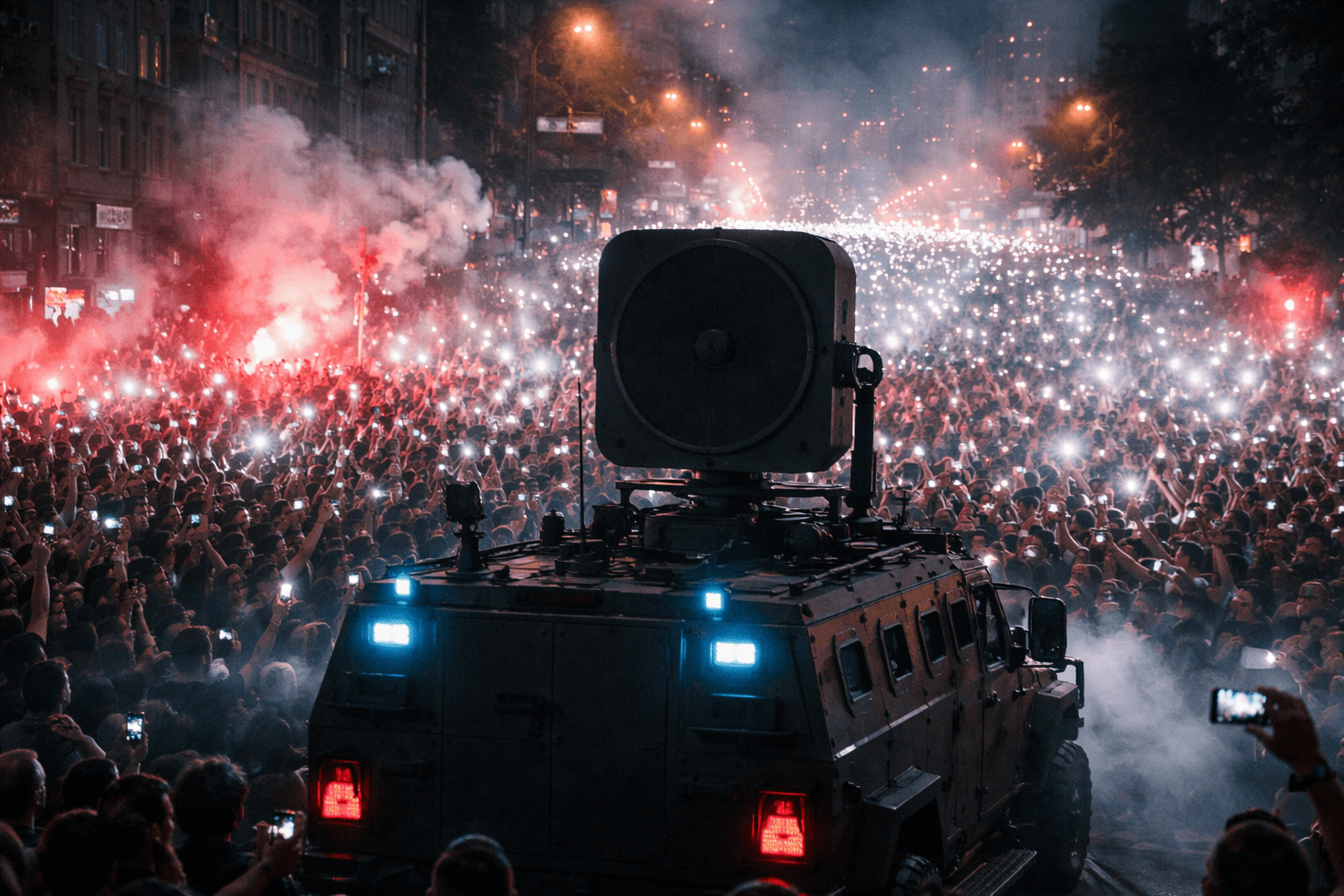
Around 7 p.m. on March 15, during the ritual 15 minutes of silence held at every protest to honor the 15 victims, a loud and disorienting sound erupted near one of the streets where demonstrators had gathered. Eyewitnesses described it differently depending on where they were standing. Some compared it to the roar of a Formula One race. Others said it sounded like a low-flying airplane or an MRI machine. The blast sent people scrambling, breaking the solemn silence and triggering panic. Video posted to social media shows the crowd visibly recoiling and running. A forensic analysis conducted by the investigative outlet Earshot, working with RFE/RL, suggests the sound may have come from a Vortex-type acoustic device fired from a position near the protesters. The Serbian Ministry of Interior denied using any sonic device, stating that such weapons are illegal under Serbian police regulations. President Vucic himself declared there is no sound cannon in the Serbian Army.
What Is a Sonic Weapon and Why Does It Matter?
A Long Range Acoustic Device, or LRAD, is a directional sound weapon capable of projecting extremely loud and focused audio at targeted individuals or crowds. At high volumes, it can cause pain, nausea, disorientation, and lasting hearing damage. LRADs have been deployed by police forces in the United States, Israel, and other countries during protests and crowd control operations. Their use is controversial because the physical effects can be severe and indiscriminate, and because they are often deployed against people exercising their right to assemble. In Serbia, their use by police is explicitly prohibited under existing regulations, which is why the government's denial matters legally as well as politically.
A Movement That Refuses to Fade
Rather than crushing the movement, the sound incident appears to have strengthened it. Large-scale demonstrations have continued, with smaller daily protests becoming routine. The student movement has evolved into something broader, encompassing demands for government transparency, judicial independence, and accountability for public infrastructure failures. International media including the BBC, Deutsche Welle, and Radio Free Europe have covered the protests extensively. The sonic weapon allegation has given the movement a powerful narrative: that the Serbian state is willing to wage what protesters call a war without bullets against its own citizens. Whether or not the government ultimately admits to deploying the device, the political damage is already done. The sound that scattered the crowd on March 15 has become a rallying cry that keeps bringing people back.
STAY IN THE KNOW
The stories shaping culture, delivered straight to your inbox.
Get exclusive editorial coverage on the events, brands, and trends that matter most. No spam, just substance.