

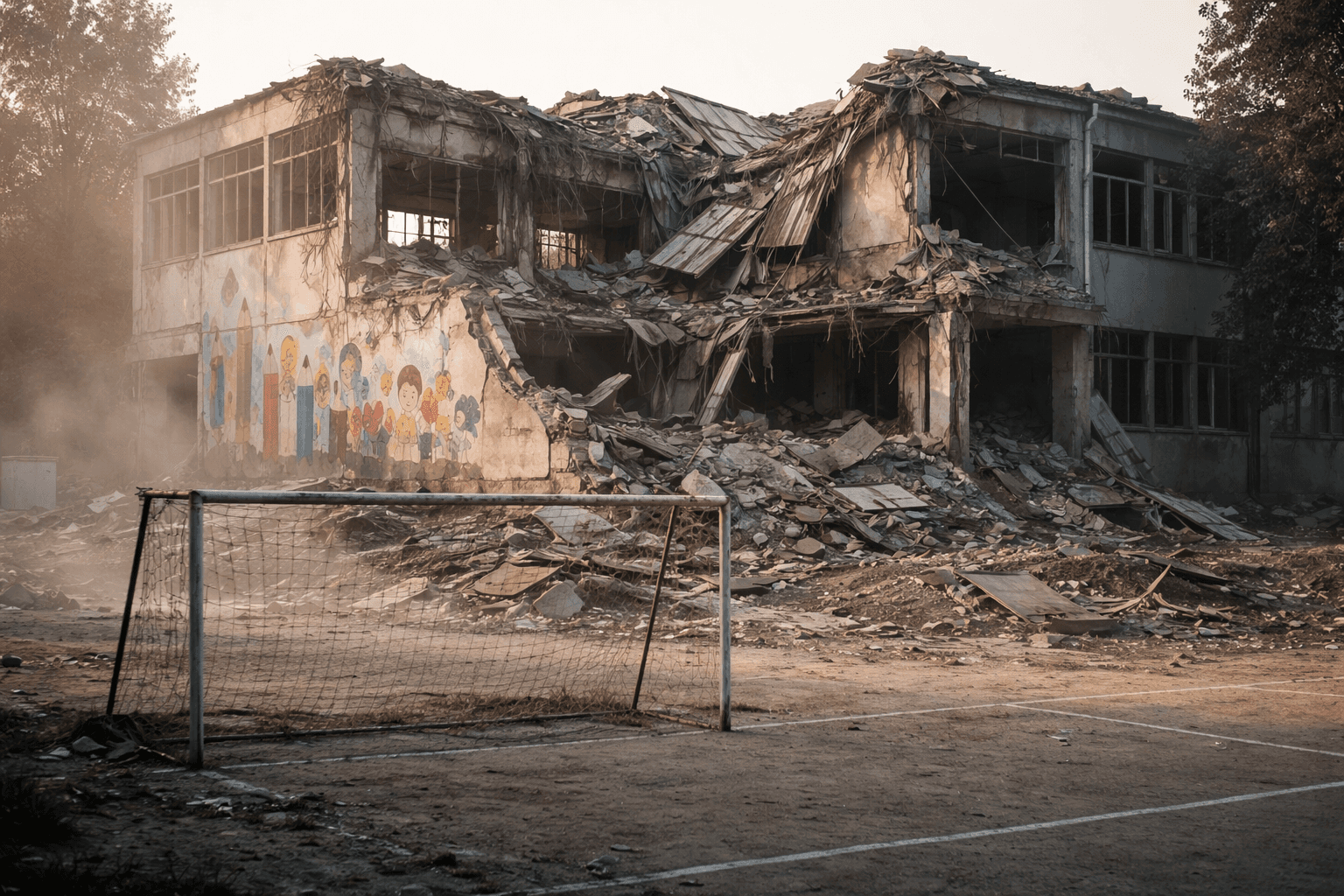
On the morning of February 28, 2026, as the first missiles of a new war streaked across Iranian airspace, over 170 girls sat in their classrooms at the Shajareh Tayyebeh elementary school in Minab, a small city in southern Iran. By noon, the school was rubble. At least 175 people were dead, the majority of them children. It is, by every available metric, the single deadliest civilian strike of the 2026 Iran war, and it has become the defining image of the conflict's human cost.
What Happened
Between 10:23 and 10:45 a.m. local time on February 28, missiles struck the Shajareh Tayyebeh school in the Shahrak-e Al-Mahdi neighborhood of Minab. The attack came on the very first day of the war, just minutes after schools across the country had begun emergency closure procedures. According to the Coordinating Council of Iranian Teachers' Trade Associations, the school had decided to close at approximately 10:00 a.m., even before a nationwide order to shut all schools was issued at 10:15 a.m. The children never made it out.
The Iranian Ministry of Education reported that 264 students were present at the time of impact. Human rights organization Hengaw put the number at around 170. Regardless of which figure is accurate, the result was catastrophic. The missile impact destroyed at least half of the two-story building, collapsing the roof onto classrooms full of children. Graphic footage that emerged in the hours after showed bodies partially trapped under concrete, smoke pouring from windows framed by cheerful murals of crayons and apples.
According to Minab's mayor and the Iranian Ministry of Education, the school was struck three times in what military analysts call a triple tap, a tactic designed to maximize casualties by hitting the same location repeatedly. Satellite analysis by BBC Verify confirmed that multiple missiles hit the site. One parent, speaking to local media, said he received a call from the school after the first strike telling him his daughter had survived. Before he could arrive, the second strike hit. She did not survive it.
The Death Toll
Iranian state media initially reported 168 fatalities, a number later revised upward to at least 175 after recovery efforts concluded on March 4. The Iranian news agency Mizan confirmed that among the dead were 66 boys, 54 girls, 26 teachers, and four parents who had come to collect their children. The school's principal was also killed. The search for survivors in the rubble was led by Minab's governor, Mohammad Radehr, who confirmed recovery operations had ended with no additional survivors found.
The strike stands as the deadliest single attack in terms of civilian casualties since the war began. For context, the combined civilian toll of the first week of fighting across all of Iran did not approach the number killed in this single incident.
The International Response
The global reaction has been fierce. At the United Nations Human Rights Council in Geneva, Iranian Foreign Minister Abbas Araghchi delivered a video address accusing the United States and Israel of waging an illegal war and committing serious human rights violations. He called the Minab strike deliberate and labeled it both a war crime and a crime against humanity. Araghchi demanded global condemnation and accountability, warning that the attack undermines the entire framework of international humanitarian law.
Amnesty International conducted its own investigation and classified the strike as unlawful, calling for those responsible to face prosecution. An Al Jazeera investigation published on March 3 concluded that the targeting of the school was likely deliberate, based on analysis of strike patterns and the absence of any military installation in the vicinity. The US and Israel have denied direct responsibility, with Washington calling for an independent probe while stopping short of accepting blame.
On March 27, UN Special Rapporteur on the right to education Farida Shaheed addressed the Human Rights Council, stating that the attack on children may constitute a war crime under international law and calling for immediate accountability measures.
Why It Matters
The Minab school strike has become far more than a single incident in a larger war. It has become a symbol, invoked by diplomats, human rights organizations, and protesters worldwide as evidence that the US-Israeli military campaign is failing to distinguish between military and civilian targets. The triple-tap methodology, the timing on the first day of war before evacuation protocols could take effect, and the target itself, a girls' elementary school, have made this the most politically damaging strike of the entire conflict.
For Iran, the attack has provided an emotionally potent rallying point. State media has amplified the story relentlessly, and the images of small graves dug for children have circulated globally. Whatever military objectives the broader campaign may be achieving, the strategic cost of Minab in terms of international legitimacy is incalculable.
What Comes Next
Multiple international investigations are now underway. Amnesty International has called for criminal accountability. The UN Human Rights Council has held emergency sessions. Iran's foreign ministry has formally requested that the International Criminal Court open proceedings against those responsible. Whether any of these mechanisms produce meaningful accountability remains an open question, but the political pressure is mounting.
The children of Minab cannot be brought back. But their deaths have fundamentally altered the narrative of this war, shifting global attention from Iran's nuclear program and leadership structure to the human beings caught in the crossfire. In the calculus of modern warfare, where precision is supposed to minimize collateral damage, the Shajareh Tayyebeh school stands as a devastating counterargument.
On the morning of February 28, 2026, as the first missiles of a new war streaked across Iranian airspace, over 170 girls sat in their classrooms at the Shajareh Tayyebeh elementary school in Minab, a small city in southern Iran. By noon, the school was rubble. At least 175 people were dead, the majority of them children. It is, by every available metric, the single deadliest civilian strike of the 2026 Iran war, and it has become the defining image of the conflict's human cost.
What Happened
Between 10:23 and 10:45 a.m. local time on February 28, missiles struck the Shajareh Tayyebeh school in the Shahrak-e Al-Mahdi neighborhood of Minab. The attack came on the very first day of the war, just minutes after schools across the country had begun emergency closure procedures. According to the Coordinating Council of Iranian Teachers' Trade Associations, the school had decided to close at approximately 10:00 a.m., even before a nationwide order to shut all schools was issued at 10:15 a.m. The children never made it out.
The Iranian Ministry of Education reported that 264 students were present at the time of impact. Human rights organization Hengaw put the number at around 170. Regardless of which figure is accurate, the result was catastrophic. The missile impact destroyed at least half of the two-story building, collapsing the roof onto classrooms full of children. Graphic footage that emerged in the hours after showed bodies partially trapped under concrete, smoke pouring from windows framed by cheerful murals of crayons and apples.
According to Minab's mayor and the Iranian Ministry of Education, the school was struck three times in what military analysts call a triple tap, a tactic designed to maximize casualties by hitting the same location repeatedly. Satellite analysis by BBC Verify confirmed that multiple missiles hit the site. One parent, speaking to local media, said he received a call from the school after the first strike telling him his daughter had survived. Before he could arrive, the second strike hit. She did not survive it.
The Death Toll
Iranian state media initially reported 168 fatalities, a number later revised upward to at least 175 after recovery efforts concluded on March 4. The Iranian news agency Mizan confirmed that among the dead were 66 boys, 54 girls, 26 teachers, and four parents who had come to collect their children. The school's principal was also killed. The search for survivors in the rubble was led by Minab's governor, Mohammad Radehr, who confirmed recovery operations had ended with no additional survivors found.
The strike stands as the deadliest single attack in terms of civilian casualties since the war began. For context, the combined civilian toll of the first week of fighting across all of Iran did not approach the number killed in this single incident.
The International Response
The global reaction has been fierce. At the United Nations Human Rights Council in Geneva, Iranian Foreign Minister Abbas Araghchi delivered a video address accusing the United States and Israel of waging an illegal war and committing serious human rights violations. He called the Minab strike deliberate and labeled it both a war crime and a crime against humanity. Araghchi demanded global condemnation and accountability, warning that the attack undermines the entire framework of international humanitarian law.
Amnesty International conducted its own investigation and classified the strike as unlawful, calling for those responsible to face prosecution. An Al Jazeera investigation published on March 3 concluded that the targeting of the school was likely deliberate, based on analysis of strike patterns and the absence of any military installation in the vicinity. The US and Israel have denied direct responsibility, with Washington calling for an independent probe while stopping short of accepting blame.
On March 27, UN Special Rapporteur on the right to education Farida Shaheed addressed the Human Rights Council, stating that the attack on children may constitute a war crime under international law and calling for immediate accountability measures.
Why It Matters
The Minab school strike has become far more than a single incident in a larger war. It has become a symbol, invoked by diplomats, human rights organizations, and protesters worldwide as evidence that the US-Israeli military campaign is failing to distinguish between military and civilian targets. The triple-tap methodology, the timing on the first day of war before evacuation protocols could take effect, and the target itself, a girls' elementary school, have made this the most politically damaging strike of the entire conflict.
For Iran, the attack has provided an emotionally potent rallying point. State media has amplified the story relentlessly, and the images of small graves dug for children have circulated globally. Whatever military objectives the broader campaign may be achieving, the strategic cost of Minab in terms of international legitimacy is incalculable.
What Comes Next
Multiple international investigations are now underway. Amnesty International has called for criminal accountability. The UN Human Rights Council has held emergency sessions. Iran's foreign ministry has formally requested that the International Criminal Court open proceedings against those responsible. Whether any of these mechanisms produce meaningful accountability remains an open question, but the political pressure is mounting.
The children of Minab cannot be brought back. But their deaths have fundamentally altered the narrative of this war, shifting global attention from Iran's nuclear program and leadership structure to the human beings caught in the crossfire. In the calculus of modern warfare, where precision is supposed to minimize collateral damage, the Shajareh Tayyebeh school stands as a devastating counterargument.
STAY IN THE KNOW
The stories shaping culture, delivered straight to your inbox.
Get exclusive editorial coverage on the events, brands, and trends that matter most. No spam, just substance.
Related post


March 24, 2026
March 24, 2026

May 22, 2025
May 22, 2025